Tree work rarely happens in ideal conditions. Narrow gateways, soft ground, awkward sites and limited space around the canopy can all make access difficult before the job has even started.
That is why Tadano Oil&Steel Octoplus tracked booms are such an ideal choice for arboriculture, combining compact access with the reach and flexibility needed for demanding tree care work.
For arborists, using the right MEWP can also reduce reliance on rope access and provide a more secure working position close to the canopy. That becomes particularly valuable when dealing with large trees, difficult site layouts or trees affected by disease or structural weakness.
Why do tree surgeons use access platforms?
For many arboriculture tasks, a MEWP gives the team a practical working position from which to reach the areas of the tree that need attention. This can help reduce physically demanding climbing, make tools and equipment easier to manage at height and allow work to progress more efficiently.
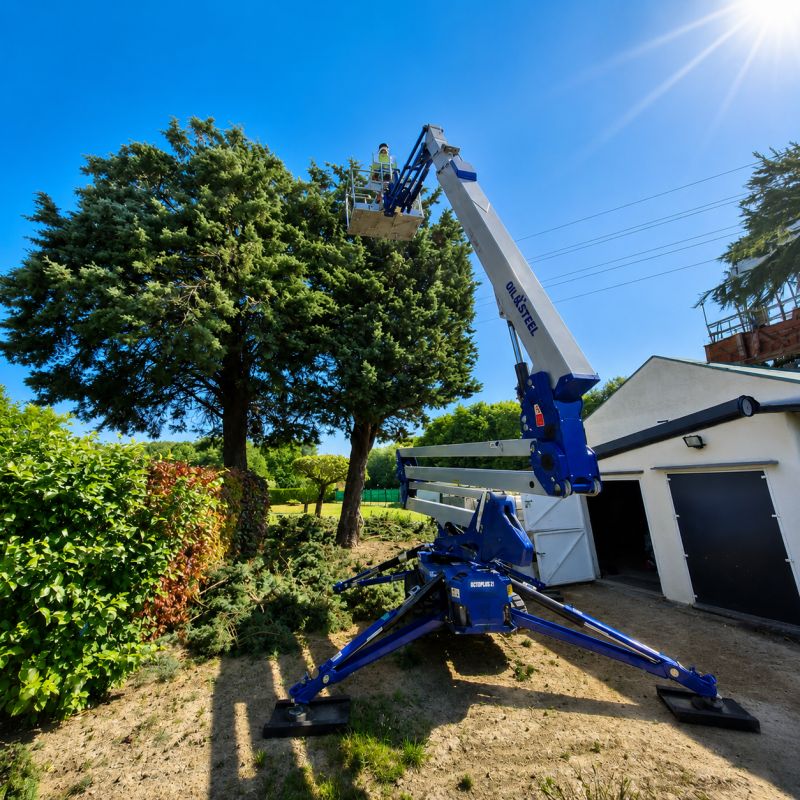
Tracked platforms also give arborists greater freedom to work away from prepared surfaces, due to its superior stability on uneven terrain, whether the job is in a garden, woodland, park or roadside location. This can open up access to areas that would otherwise be difficult to serve with conventional wheeled platforms.
There can be commercial benefits too. A capable tracked boom can help tree specialists complete some jobs more efficiently by reducing the amount of climbing required, improving access to different parts of the canopy and allowing teams to work from a more stable position with tools and equipment close at hand. That can help shorten set-up and working time on suitable tasks, while also making it possible to take on jobs that may be difficult to complete safely using rope access alone.
In practical terms, that can broaden the range of services a business can offer, from tree pruning, crown reduction and deadwood removal to tree inspections, sectional dismantling, storm-damage work and maintenance of larger or harder-to-reach trees. For some contractors, it can also open up more work in parks, estates, roadside locations and commercial grounds where access conditions or tree conditions make conventional climbing less practical.
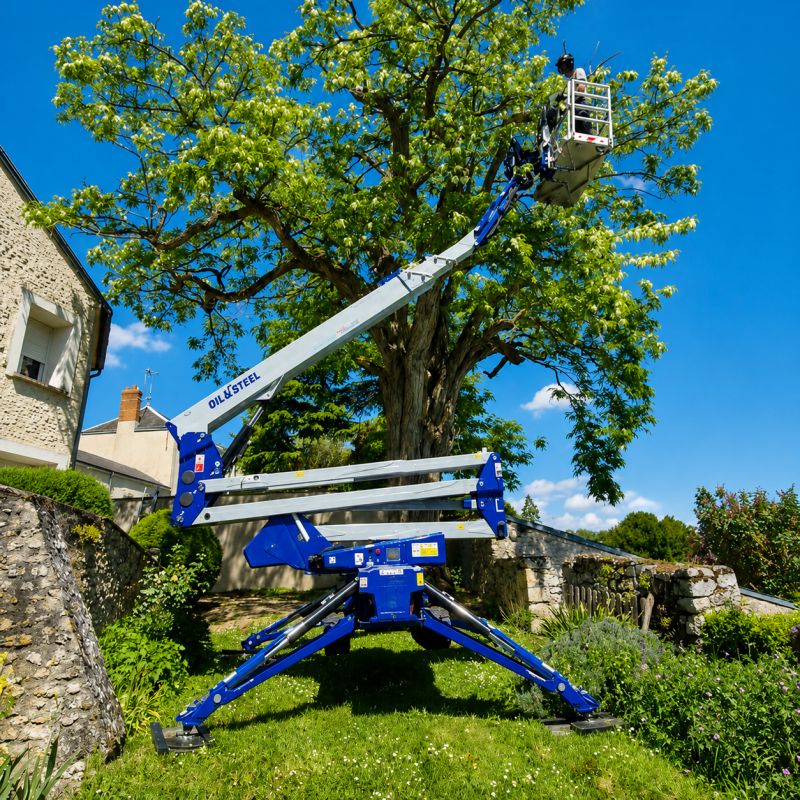
Octoplus 21 in action across tree care and green maintenance
The Octoplus 21 gives arborists the performance needed for demanding canopy work, with a maximum working height of 20.7m, outreach of 10.6m. With a tracking and stowed width of just 785mm, the Octoplus 21 is able to be transported easily into confined work spaces.
Those qualities helped convince Celtic Tree Surgery owner Ian Davies to invest in the platform. Alongside its working envelope, he was particularly impressed by the all-steel construction and the way hoses, chains and wiring are protected inside the boom, an important consideration when falling branches are part of the working environment.
“Given the work we do as tree surgeons, this build quality gives me greater assurance.”
Read how the Octoplus 21 impressed Celtic Tree Surgery.
Beyond conventional tree surgery the Octoplus 21 is also supporting I Want Plants, which specialises in biophilic design and architectural planting. They’ve invested in an Octoplus 21 to bring more of its powered access requirements in-house.
Having the platform available within its own fleet gives the team greater freedom to plan maintenance around customer requirements, respond more quickly and reduce reliance on external access hire.
Read how I Want Plants is using the Octoplus 21 to support its growth.
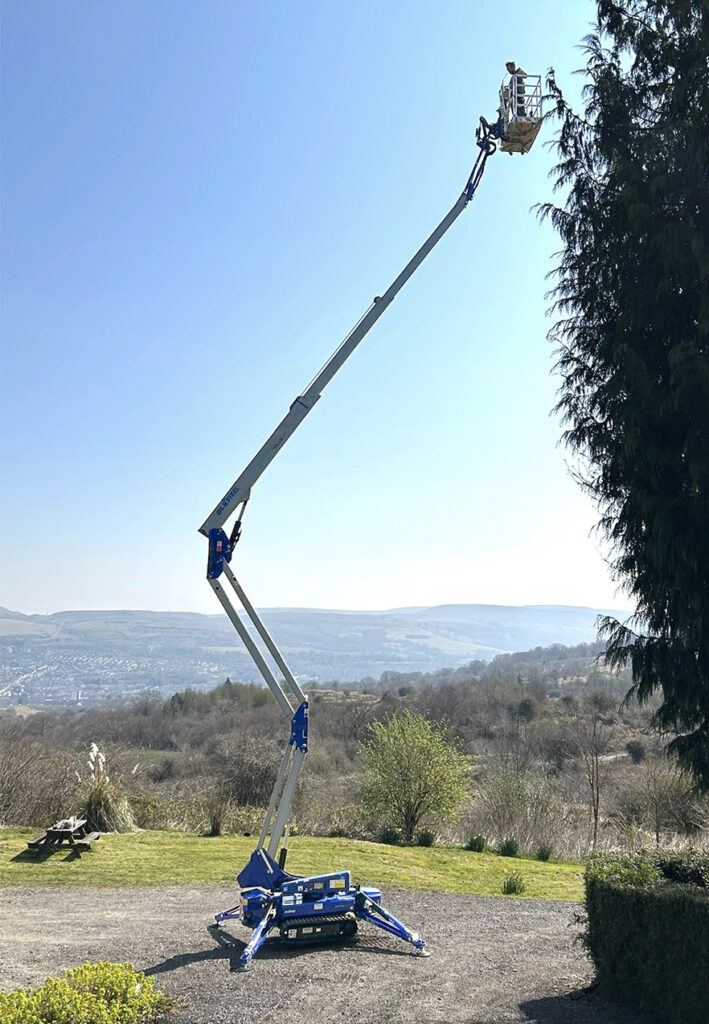
Octoplus 17 for compact tree reduction work
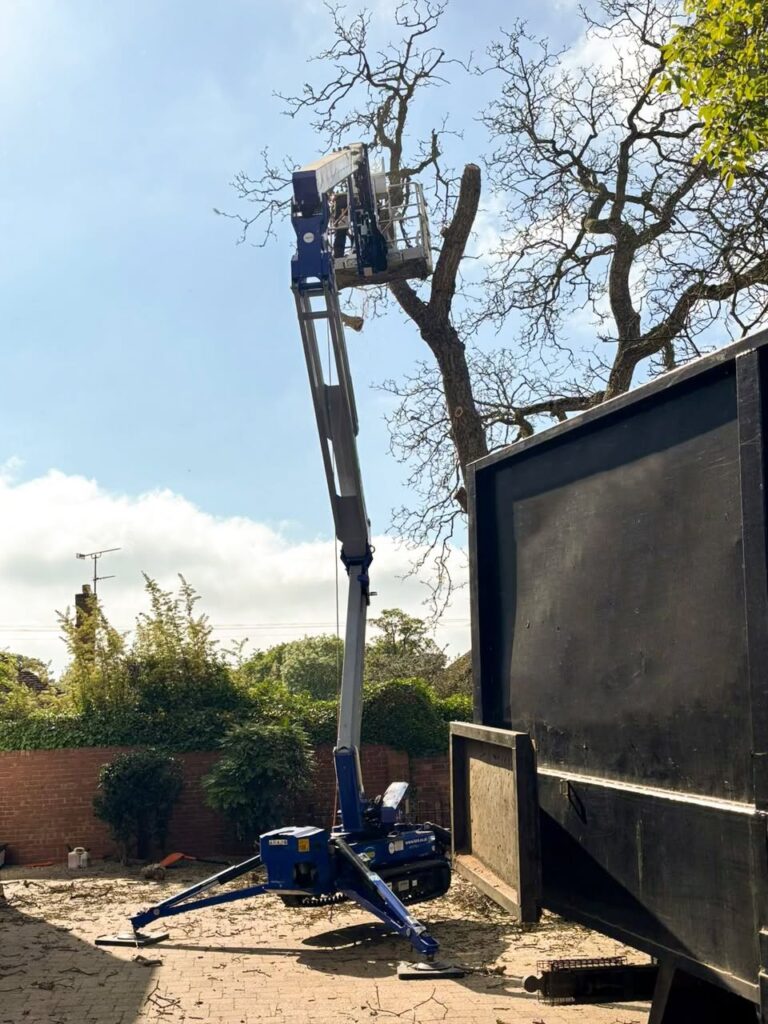
For jobs that do not require quite as much height, the Octoplus 17 offers a smaller alternative. On a residential tree reduction project, it was positioned behind a property so the arborist could work directly from the basket rather than relying on conventional rope access.
Its 17m working height and 7.6m outreach gave the arborist the performance needed for the reduction work, while its compact tracking dimensions helped the platform reach the rear of the property. Automatic outrigger levelling and protected boom components added further practical benefits for the task.
As Sales and After-Sales Manager at Hird Sales, Carl Cooper explained:
“Tree management specialists also find their work is more productive and of a higher quality.”
A stable platform can give arborists more opportunity to assess the tree, manage tools and work methodically around the canopy.
What other Octoplus platforms are available for tree work?
The Octoplus 17 and Octoplus 21 cover a wide range of everyday arboriculture applications, while larger trees and more demanding jobs may require additional reach.
The Octoplus 30 extends the range with a maximum working height of 29.6m and outreach of 16.3m, giving tree care teams another option for taller trees and applications where reaching further into the canopy is important.
Across the range, different power options are available, including petrol, diesel, bi-energy and lithium electric versions, allowing operators to choose a configuration that suits the environment and the type of work they carry out.
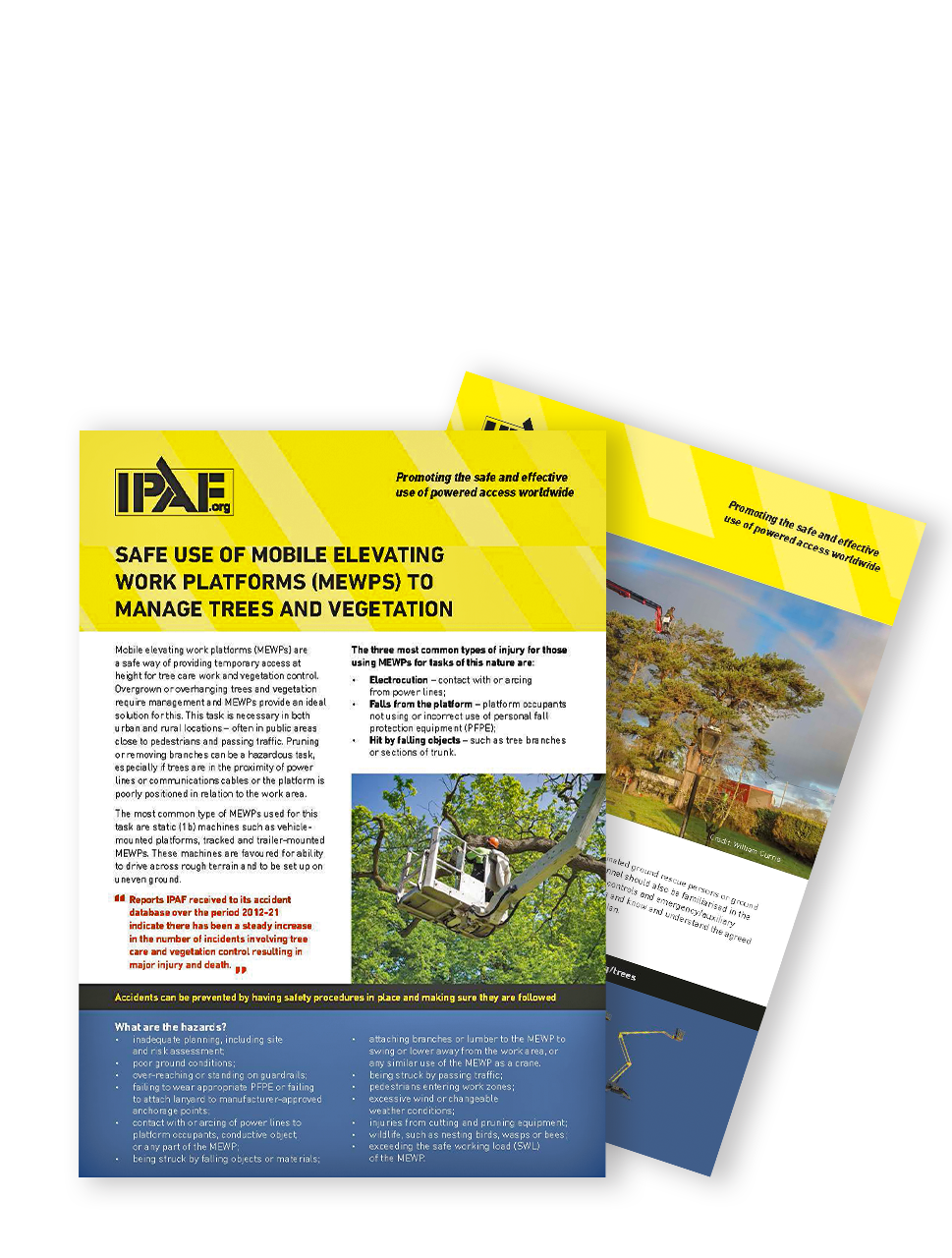
How can arborists use MEWPs safely around trees?
MEWPs are widely used for tree care, but arboriculture introduces hazards that must be considered before work starts. IPAF guidance on using MEWPs around trees and vegetation highlights the importance of planning, assessing ground conditions and maintaining awareness of hazards above and around the platform.
The International Powered Access Federation (IPAF) is a global not-for-profit organisation that promotes the safe and effective use of powered access equipment. Alongside technical guidance and safety initiatives, it provides internationally recognised training for MEWP operators, managers and other powered access professionals through approved training centres worldwide.
For arborists, key considerations include assessing the ground before set-up, maintaining safe distances from power lines, creating suitable exclusion zones where branches may fall, using appropriate personal fall protection equipment and ensuring operators are properly trained and familiarised with the platform.
IPAF also warns against using the MEWP as an anchor point when lowering branches or sections of timber, and stresses the need to prevent branches coming into contact with the boom.