Large-format glazing leaves very little room for error. Successful installation depends on planning the operation properly, choosing the right equipment and making sure the people carrying out the work understand the glass, the façade system and the wider site programme.
That focus on planning, control and accountability is central to Sparrow Construction’s façade-installation work. The specialist commercial façade contractor supports projects across the UK through installation-only, installation and management, and full façade package delivery, with a clear focus on coordination, accountability and getting the installation right first time.
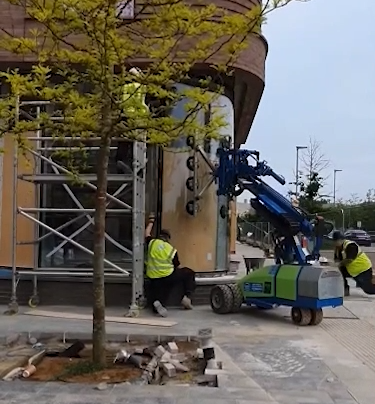
For Sparrow, specialist glazing equipment such as a Winlet glazing robot fits naturally into that way of working. On large glass installations, the Winlet can take the weight of the glass panel, hold it steadily in position and allow the installation team to concentrate on setting, fixing and sealing rather than supporting the panel manually.
That matters because the equipment is only one part of a successful façade installation. The team still needs to understand tolerances, fixing details, interfaces with surrounding construction and the sequence of work on site. Used properly, a Winlet supports that process by giving experienced installers a more manageable way to handle large, heavy and high-value glass units while keeping the operation aligned with the wider programme.
Video credit: Sparrow Construction
Sparrow has already shown how well that combination can work on specialist glazing projects. On one recent installation, the team used a Winlet 575 to handle a 350kg curved glass panel, supporting the glass weight throughout the lift while the installers managed the opening, fixing sequence and final placement. Read more about how Sparrow used the Winlet 575 to install the curved glass panel.
For contractors working on demanding façade and glazing packages, that is where equipment such as Winlet adds real value. It supports safer handling and more efficient installation, through maintaining control of the lift and reducing manual handling, while leaving the technical decisions, coordination and quality of the finished work in the hands of the people who understand the project best.